
Google Reviews for Auto Repair Shops: A Complete Guide
For auto repair shops, Google reviews aren't just nice to have—they're essential for survival in today's competitive market. When someone's car breaks down or needs service, the first thing they do is search Google for local mechanics. And what determines which shop they choose? Your star rating and reviews. A strong collection of positive Google reviews can mean the difference between a full service bay and an empty one.
Yet many auto repair shop owners struggle to collect reviews consistently. Customers drive away satisfied but forget to leave feedback. You're busy running the business, not chasing down testimonials. This guide will show you practical, realistic ways to build your review presence without becoming a nuisance or sacrificing quality service time.
Why Google Reviews Matter More for Auto Shops
Auto repair is a high-trust service category. Customers are literally trusting you with their safety and often spending hundreds or thousands of dollars. Unlike choosing a restaurant, picking the wrong mechanic can have serious consequences. This makes social proof through reviews absolutely critical.
Google's local search algorithm heavily weights review quantity, quality, and recency when ranking businesses in map results. Shops with 50+ recent reviews consistently outrank competitors with fewer reviews, even if the competitor has been around longer. Beyond rankings, a 4.5+ star average with detailed reviews directly influences the click-through decision. Customers read your reviews to assess honesty, quality of work, pricing transparency, and how you handle problems.
The Timing Challenge: When to Ask
The biggest mistake auto shops make is asking for reviews too early or too late. Ask while the customer is still waiting for their car, and they haven't experienced the full service yet. Wait three days after pickup, and they've forgotten about you entirely.
The ideal moment is right at vehicle pickup, after you've walked them through the work completed and answered their questions. They're standing at your counter, satisfied with the service, and have their phone in hand. This is when the experience is fresh and positive emotions are highest. A simple, genuine request at this moment converts far better than any follow-up email.
Making It Frictionless: Remove Every Barrier
Even willing customers won't leave a review if the process is complicated. Asking them to "search for us on Google and leave a review" introduces multiple steps where they can abandon the process. They have to remember your exact business name, find the right listing among similar results, locate the review section, and then write something.
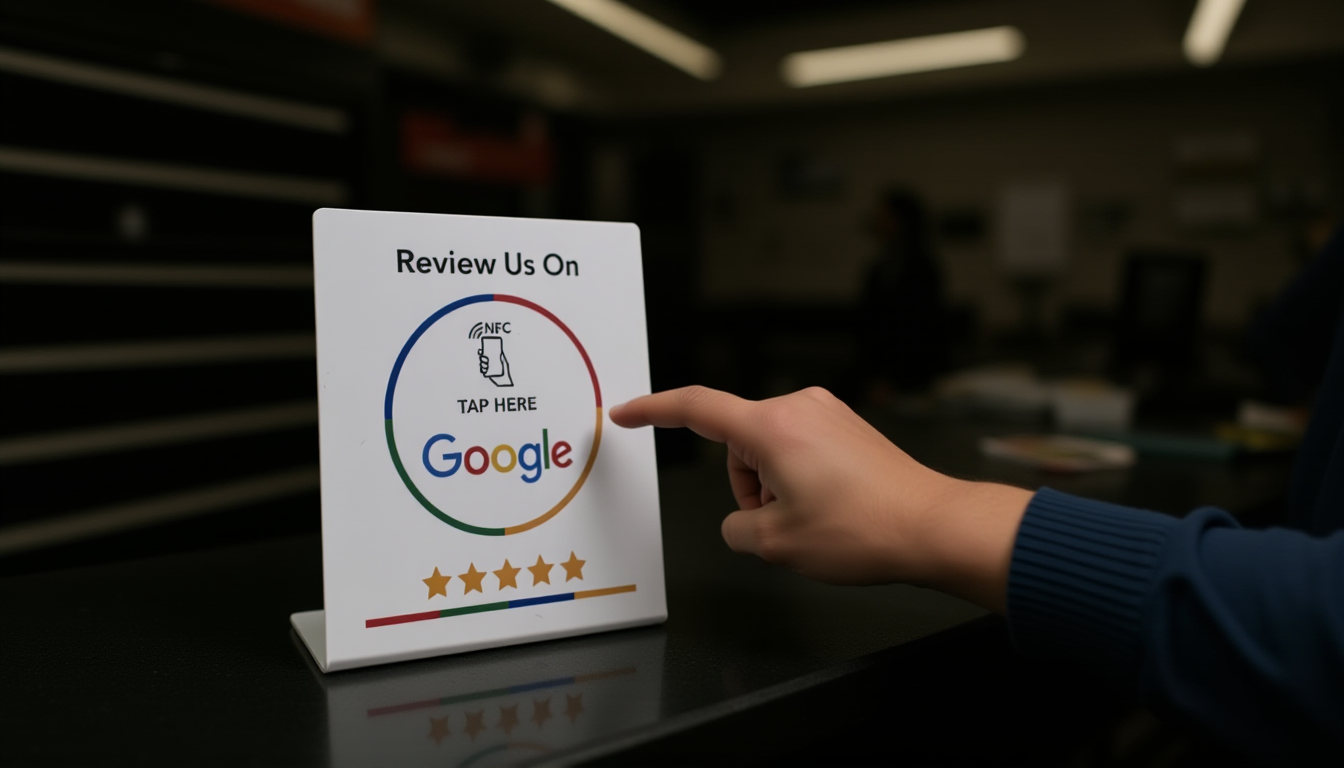
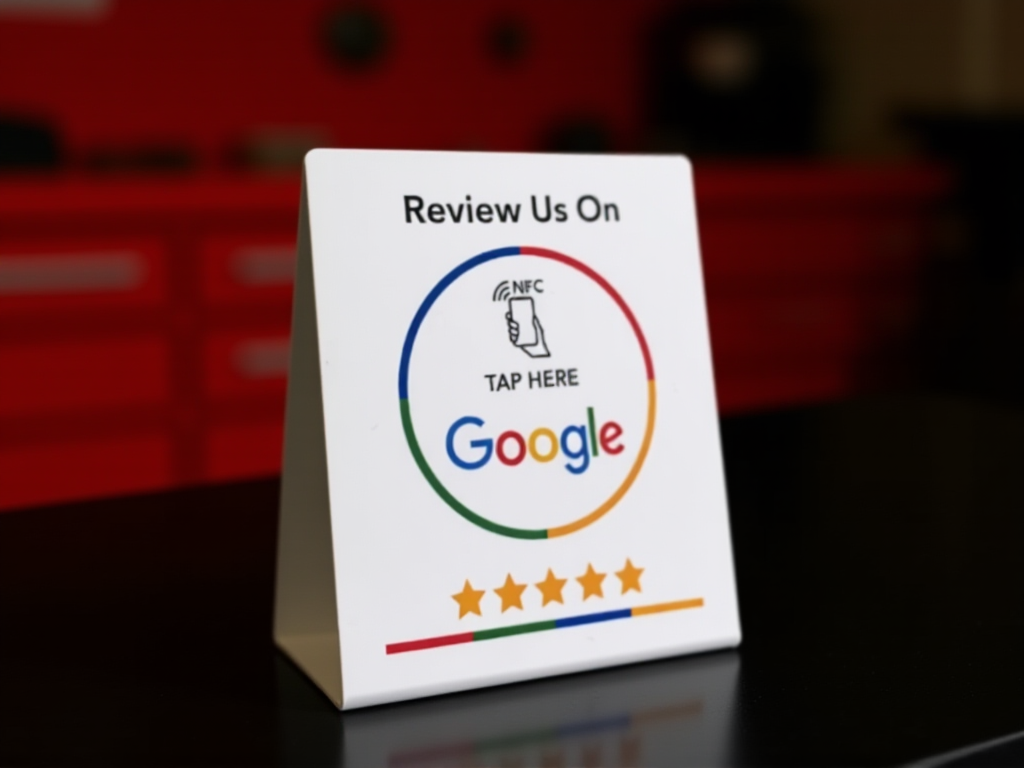
The solution is to eliminate every unnecessary step. Provide a direct link or mechanism that takes them straight to your review page in one tap. Some shops use QR codes, others text customers a link. NFC review cards have become popular because they require just a phone tap—no app to open, no code to scan, no typing required. The customer taps their phone above the card on your counter, and Google's review page opens instantly. It's the same contactless technology they use for payments, so it feels familiar and modern.
What to Say When Asking
How you phrase the request matters enormously. Avoid desperate-sounding pleas or making it transactional. Instead, frame it as helping other customers make informed decisions. Try something like: "If you're happy with the service today, would you mind sharing your experience on Google? It really helps other folks know what to expect when they bring their car in."
This approach is honest, low-pressure, and connects the review to a meaningful purpose beyond boosting your numbers. Train every team member who interacts with customers at pickup to make this request naturally as part of the checkout conversation. Consistency is key—you should be asking every satisfied customer, every single time.
Responding to Every Review
Collecting reviews is only half the strategy. How you respond to them—both positive and negative—significantly impacts potential customers reading them later. Thank customers for positive reviews with specific details that show you remember their visit. For negative reviews, respond professionally, acknowledge the concern, and offer to make it right offline.
Never argue publicly or make excuses. A thoughtful response to a critical review can actually improve your reputation by demonstrating that you care about customer satisfaction and stand behind your work. Many customers specifically look for how businesses handle complaints when evaluating reviews.
Building a strong Google review presence takes time and systematic effort, but it's one of the highest-ROI marketing activities for auto repair shops. Start with the fundamentals: ask every satisfied customer at the right moment, make the process as easy as possible, and respond to every review you receive. Do this consistently for three months, and you'll see measurable impact on both your search visibility and new customer inquiries.
Ready to collect more reviews?
The ReviewCard ships across Europe, starting at €24.95. No subscription, ever.
See pricing