
Google Reviews for Cafes: A Complete Guide (2024)
For cafe owners, Google reviews can make or break your business. When potential customers search for "coffee near me" or "best cafe in [city]," your star rating and review count heavily influence whether they choose your establishment or walk past to a competitor. Yet many cafe owners struggle to collect reviews consistently, even when customers love their experience.
Understanding how to effectively gather and manage Google reviews isn't just about vanity metrics—it directly impacts your foot traffic, revenue, and long-term sustainability in an increasingly competitive market.
Why Google Reviews Matter More for Cafes
Cafes operate in a unique position: you're often a customer's daily ritual, yet the decision to try a new cafe is heavily research-driven. Studies show that 93% of consumers read online reviews before visiting a local business, and businesses with higher ratings appear more prominently in Google Maps results.
For cafes specifically, reviews serve multiple purposes. They validate your coffee quality, highlight your atmosphere, showcase your customer service, and even mention specific menu items that become draw cards. A cluster of recent positive reviews signals that your cafe is active, consistent, and worth visiting today—not just worth remembering from last year.
Beyond attracting new customers, reviews provide invaluable feedback. You'll learn which pastries customers rave about, whether your seating arrangements work, and if your staff create memorable experiences. This real-time insight helps you refine your offering continuously.
The Biggest Challenge: Actually Getting Customers to Review
Here's the problem every cafe owner faces: satisfied customers leave happy but rarely leave reviews. They're juggling their coffee cup, checking their phone, or rushing to their next appointment. The intention to review later rarely converts to action once they've left your premises.
Traditional approaches have mixed results. Verbally asking customers feels awkward and puts staff in an uncomfortable position. Printed cards with QR codes get glanced at but often ignored. The friction between "I enjoyed that coffee" and "I'm now writing a Google review" is surprisingly high.
The solution lies in reducing this friction to near-zero. The best time to capture a review is during the moment of satisfaction—right after that first sip of an excellent flat white, or when a customer compliments your barista. This requires a review collection method that's instant, effortless, and non-intrusive.
Practical Tools That Work in Real Cafe Environments
Successful cafes use a variety of approaches to collect reviews systematically. The most effective methods share common traits: they're passive (no staff persuasion needed), immediate (work in the moment), and simple (no typing long URLs).
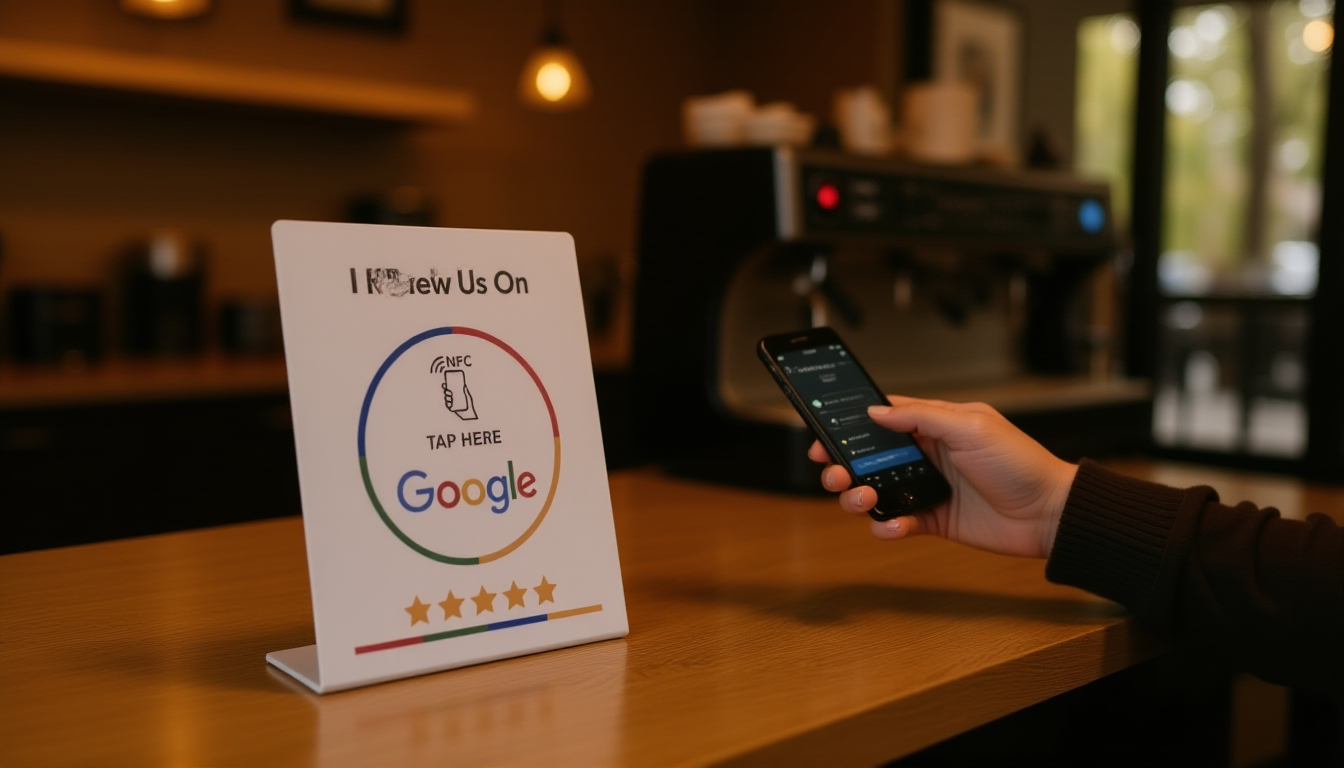
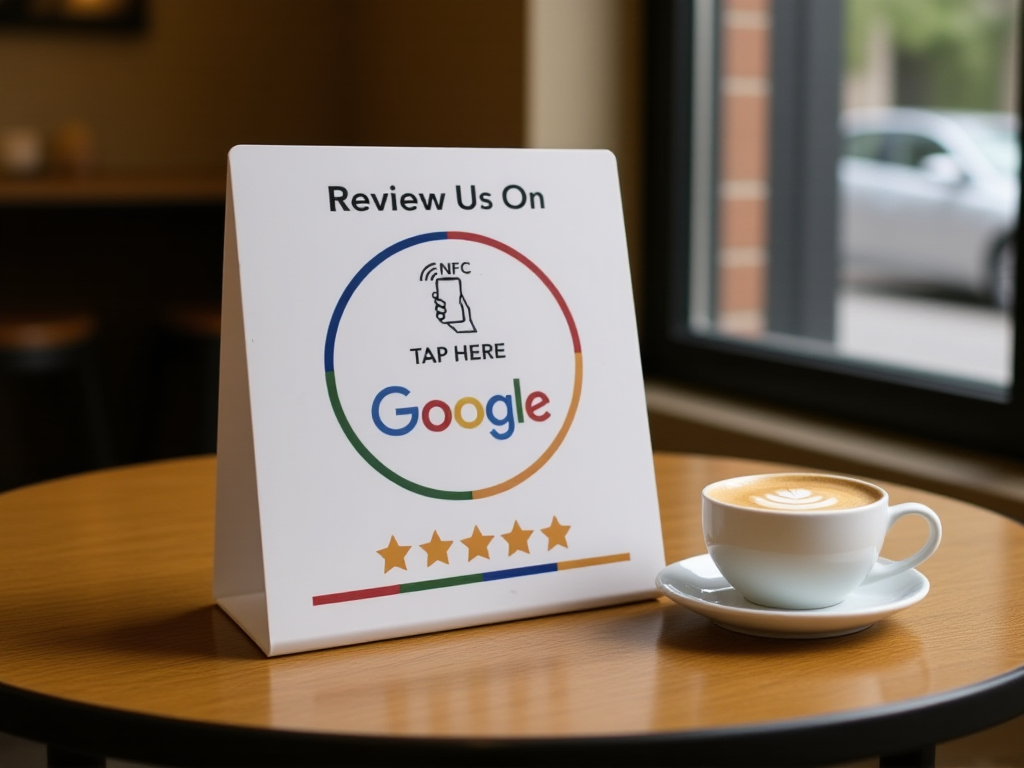
NFC review cards have become increasingly popular in hospitality settings because they address all three requirements. These small cards sit on your counter or tables, and customers simply tap their smartphone near the card to be directed straight to your Google review page—no app downloads, no QR code scanning, no typing. The physical presence serves as a constant, polite reminder without requiring staff to make repeated asks.
Other effective methods include strategically placed signage near your point of sale, follow-up SMS messages for customers who've joined a loyalty program, and QR codes printed on receipts. The key is testing multiple touchpoints and measuring which generates actual reviews, not just awareness.
Responding to Reviews: The Part Most Cafes Skip
Collecting reviews is only half the equation. How you respond to both positive and negative reviews significantly impacts your reputation and future review rates.
For positive reviews, a simple thank you goes a long way. Mention specific details from their review ("So glad you enjoyed the almond croissant—it's our baker's specialty") to show you're genuinely reading feedback. This encourages other customers to leave detailed reviews and demonstrates that you value customer input.
Negative reviews require more care. Respond quickly, acknowledge the concern without being defensive, and offer to make it right. A well-handled negative review can actually enhance your reputation by showing you're responsive and committed to improvement. Many potential customers specifically read negative reviews and how businesses respond to them before making decisions.
Building a Sustainable Review Strategy
The cafes with the strongest Google presence didn't get there through one-off campaigns—they built review collection into their daily operations. This means creating an environment where asking for reviews feels natural and systems are in place to make it easy.
Train your staff to recognize high-satisfaction moments. If a customer says "this is the best coffee I've had all week," that's your cue. Have your review collection tool visible and accessible. Track your review count monthly and celebrate milestones with your team.
Remember that quality matters more than quantity. Five detailed, authentic reviews from genuinely happy customers carry more weight than fifty generic one-liners. Focus on delivering exceptional experiences first, then make it effortless for those customers to share their experience.
Google reviews aren't just about building social proof—they're about creating a feedback loop that makes your cafe better while attracting more customers who'll love what you offer. Start with one method, implement it consistently, and watch both your rating and your foot traffic grow.
Ready to collect more reviews?
The ReviewCard ships across Europe, starting at €24.95. No subscription, ever.
See pricing