
Google Reviews for Dentists: A Complete Guide
Google reviews for dentists are online patient testimonials that appear on a dental practice's Google Business Profile, helping new patients evaluate quality of care and influencing local search rankings. Most patients read reviews before booking their first appointment, making a strong review presence essential for practice growth.
For dental practices, Google reviews serve a dual purpose: they build trust with prospective patients and signal to Google that your practice is active and relevant, which improves your visibility in local search results when someone searches for "dentist near me" or similar terms.
Why Google Reviews Matter for Dental Practices
Dental care is deeply personal, and patients want reassurance before choosing a provider. Reviews offer social proof that your practice delivers quality care, treats patients with respect, and maintains a welcoming environment. Unlike general service businesses, dental practices benefit particularly from reviews that mention specific concerns like anxiety management, pain-free procedures, or child-friendly approaches.
From a business perspective, reviews directly impact your practice's position in Google's local pack—the map and business listings that appear at the top of search results. Practices with more recent, positive reviews typically rank higher than competitors with fewer or outdated reviews, even when other factors like location are similar.
Creating a Frictionless Review Request Process
The biggest obstacle to collecting reviews isn't patient satisfaction—it's the complexity of the request process. Patients leave the office intending to write a review, then forget once they're home. The solution is to make leaving a review as simple as possible while the positive experience is still fresh.
Timing matters enormously. The ideal moment is immediately after a successful appointment, when the patient is still at your front desk and satisfaction is highest. A simple verbal request works, but many patients need a direct path to your review page rather than having to search for your practice later.
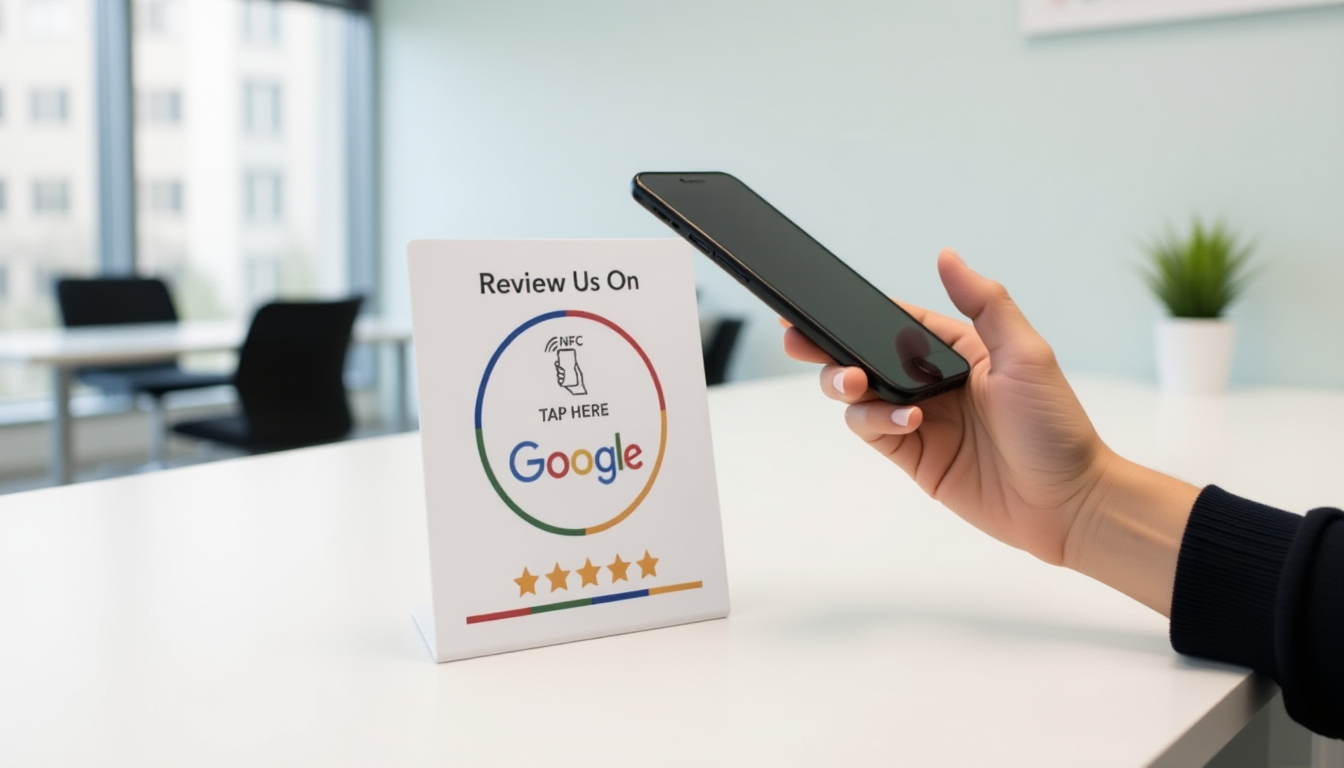
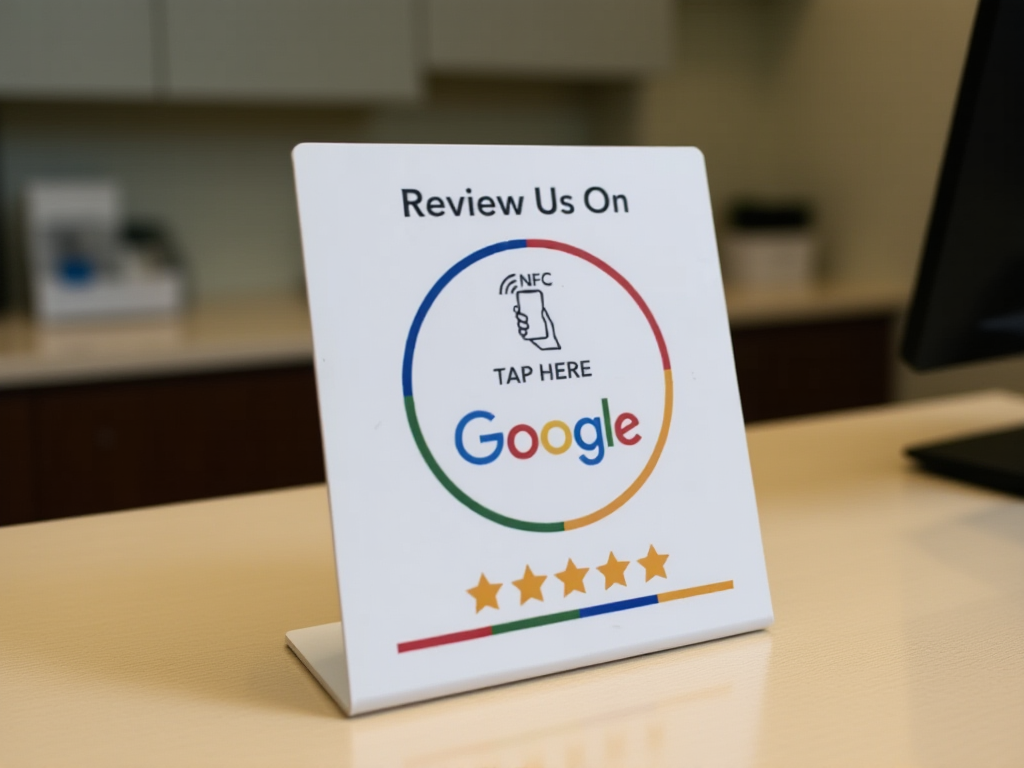
NFC review card stands placed at the checkout counter provide this direct path—patients simply tap their phone to the card and immediately land on your Google review page, eliminating the need to remember practice names or navigate through Google Maps later. This removes the friction that causes most review requests to fail.
What Makes a Valuable Dental Review
Not all reviews carry equal weight. Generic five-star ratings help your average score, but detailed reviews that mention specific aspects of care provide far more value. Reviews that discuss your hygienists' thoroughness, the comfort of your office, short wait times, or how you handled a nervous patient give prospective patients the information they actually need.
Encourage (but never incentivize) patients to share specific details about their experience. A simple "We'd love to hear what you thought about your visit today" often prompts more detailed responses than asking for a star rating alone. Never offer discounts or rewards for reviews, as this violates Google's guidelines and can result in review removal or profile penalties.
Responding to Reviews: The Good and the Difficult
Every review deserves a response, not just the negative ones. Thanking patients for positive reviews shows you value their time and reinforces their decision to choose your practice. Keep responses professional but warm, and avoid repetitive templates that make your engagement seem automated.
Negative reviews require more care. Respond promptly, acknowledge the concern without admitting fault, and offer to discuss the matter privately. Never argue publicly or share patient information (even if the reviewer shared it first). A professional response to a critical review often impresses potential patients more than the complaint itself concerns them, as it demonstrates how you handle problems.
Compliance and Privacy Considerations
Dental practices operate under HIPAA regulations, which means you cannot share any patient information in review responses, even in defense against unfair criticism. Keep responses generic and never confirm or deny that someone was a patient. Your review request process should also never require patients to provide personal information beyond what they choose to share in their Google account.
Practical tip: Train your front desk staff to make review requests part of the checkout process for positive visits. A simple script like "If you were happy with your visit today, we'd love if you could share your experience on Google—just tap your phone here" makes the request natural and specific.
Frequently Asked Questions
How many Google reviews does a dental practice need?
There's no magic number, but aim for steady growth rather than a specific target. New reviews every month signal an active practice, and 20-50+ reviews provide enough data for patients to trust the overall rating. Focus on consistency rather than hitting a number.
Should I respond to every Google review my dental practice receives?
Yes, responding to all reviews shows you value patient feedback and maintain an active presence. Thank positive reviewers briefly and address concerns in negative reviews professionally, always keeping HIPAA compliance in mind.
Can I ask patients for reviews while they're still in the office?
Absolutely—this is actually the most effective time to request reviews, as the positive experience is fresh and the patient is already engaged. Just ensure requests are never coercive and always give patients the freedom to decline.
Ready to collect more reviews?
The ReviewCard ships across Europe, starting at €24.95. No subscription, ever.
See pricing