
Google Reviews for Restaurants: A Practical Growth Guide
Google reviews have become the digital equivalent of word-of-mouth recommendations for restaurants. When potential diners search for a place to eat, those star ratings and customer comments often make the difference between a full dining room and empty tables. For restaurant owners, understanding how to effectively gather and manage Google reviews isn't just about reputation—it's about survival in an increasingly competitive market.
Why Google Reviews Matter More for Restaurants
The restaurant industry faces unique challenges when it comes to online reputation. Unlike retail stores where customers might browse for extended periods, diners typically make quick decisions based on immediate impressions. A 2023 study found that 88% of consumers read reviews before choosing a restaurant, and a single-star increase in Google rating can lead to a 5-9% increase in revenue.
Google reviews also directly impact your local search visibility. Restaurants with consistent, recent reviews rank higher in "near me" searches—the exact moment when hungry customers are making dining decisions. The algorithm favors businesses that demonstrate ongoing customer engagement, making review generation an essential part of your marketing strategy.
The Right Time to Ask for Reviews
Timing is everything when requesting restaurant reviews. The ideal moment is when customers are genuinely satisfied—typically right after a positive dining experience, while the flavors and service are still fresh in their minds. Staff training plays a crucial role here: servers should be able to recognize satisfied tables and make natural, non-pushy requests.
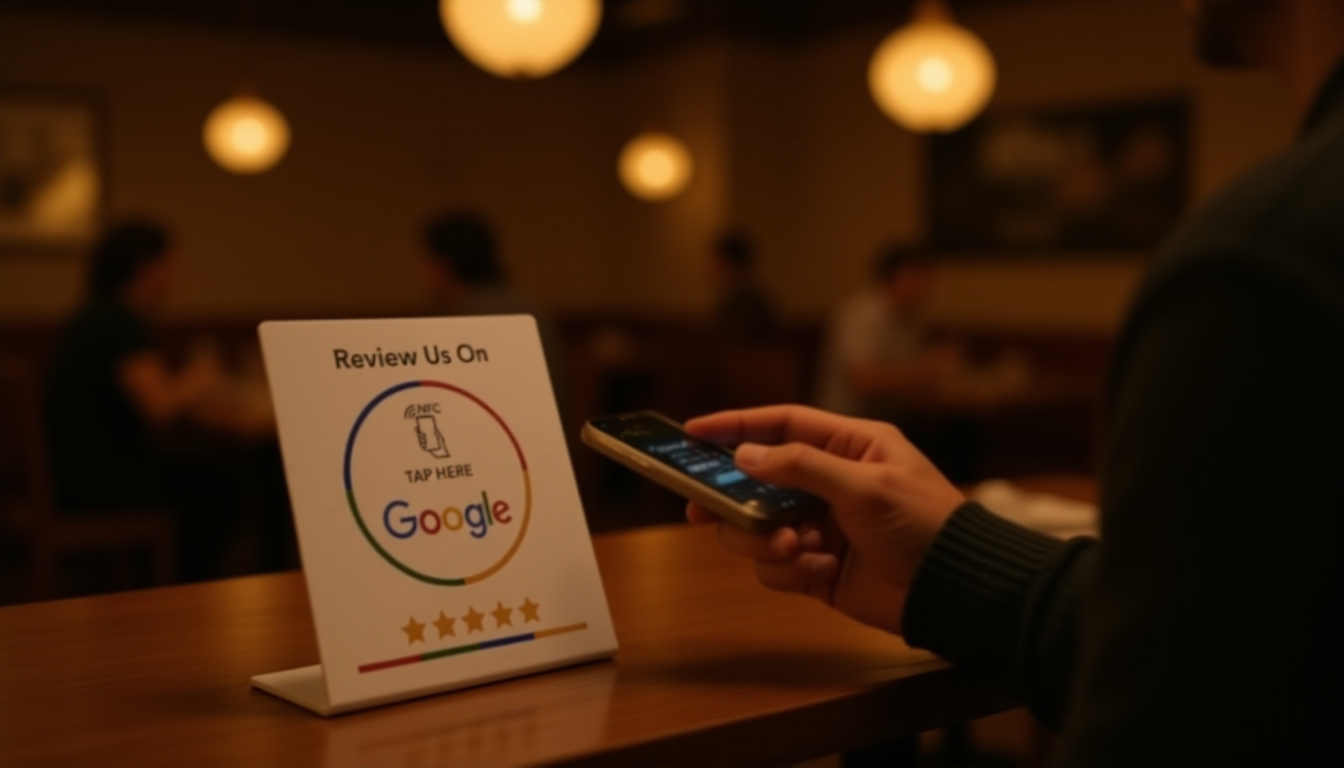
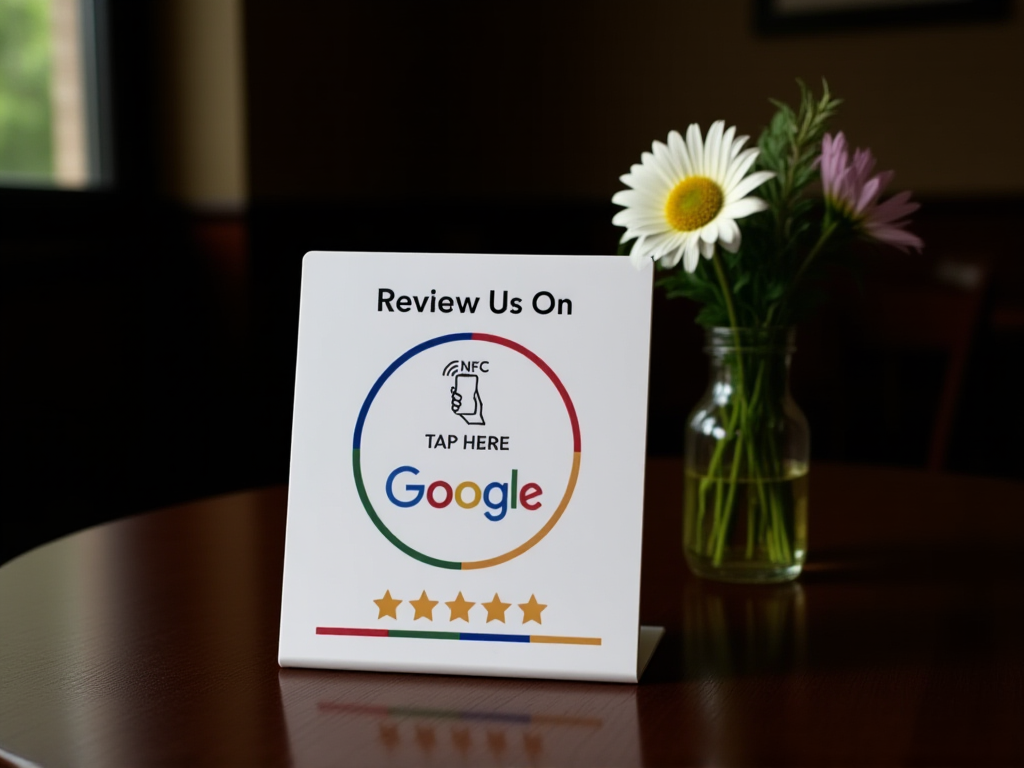
Many successful restaurants place subtle reminders at the point of payment or exit. Some have found that NFC review cards on the host stand or near the exit provide a frictionless way for happy customers to leave feedback with a simple phone tap—no typing URLs or searching required. The key is making the process as effortless as possible when goodwill is at its peak.
Creating a Review-Worthy Experience
Before focusing on collection tactics, ensure your restaurant consistently delivers experiences worth reviewing. This seems obvious, but many establishments focus on asking before fixing underlying issues. Exceptional food quality, attentive service, clean facilities, and memorable touches create natural review motivation.
Pay attention to the small details that customers mention in existing reviews. If multiple reviewers praise your homemade desserts, make sure that consistency never wavers. If someone mentions slow service during peak hours, address the staffing issue. Your review strategy should be built on a foundation of genuine quality, not just marketing tactics.
Responding to Reviews: The Good and the Bad
Every Google review—positive or negative—deserves a thoughtful response. When customers take time to leave positive feedback, a personalized thank-you reinforces their choice and encourages return visits. Mention specific details they raised to show you're truly reading and appreciating their comments.
Negative reviews require even more care. Respond promptly, acknowledge the concern without making excuses, and offer a genuine path to resolution. Many potential customers actually read negative reviews to see how businesses handle problems. A professional, empathetic response to criticism can actually build trust with future diners who witness your commitment to customer satisfaction.
Making Review Requests Feel Natural
Nobody likes feeling pressured to leave a review, and heavy-handed requests can backfire. Instead, integrate review opportunities naturally into your customer journey. Train staff to mention it conversationally: "We're a small family restaurant and reviews really help us—if you enjoyed your meal, we'd appreciate you sharing your experience on Google."
Physical prompts work well when they're unobtrusive. A small NFC review card stand near the exit or on the host desk allows customers to engage on their own terms, without staff directly asking. Table tents or business cards with QR codes offer similar convenience. The goal is to remove friction while respecting customer autonomy.
Measuring Your Review Strategy Success
Track your progress with specific metrics: total review count, average rating, review velocity (how many per month), and response rate. Set realistic goals—perhaps increasing monthly reviews from five to ten, or improving your response time to under 24 hours. Use Google Business Profile insights to understand when customers find and interact with your listing.
Remember that building a strong Google review presence is a marathon, not a sprint. Consistency matters more than occasional bursts of effort. Restaurants that integrate review generation into their daily operations—rather than treating it as a periodic campaign—see the most sustainable growth in both ratings and customer traffic.
By focusing on genuine customer satisfaction, making the review process effortless, and engaging meaningfully with feedback, your restaurant can build the kind of online reputation that fills tables and builds lasting success.
Ready to collect more reviews?
The ReviewCard ships across Europe, starting at €24.95. No subscription, ever.
See pricing