
How Google Reviews Impact Local Business Ranking in 2024
If you run a local business, you've probably noticed competitors with dozens or hundreds of Google reviews ranking above you in search results. That's no coincidence. Google reviews have become one of the most powerful ranking factors for local businesses, directly influencing where you appear when potential customers search for services in your area.
Understanding the connection between reviews and local ranking isn't just about vanity metrics. It's about visibility, credibility, and ultimately, revenue. Let's break down exactly how Google reviews affect your local search presence and what you can do about it.
Why Google Reviews Matter for Local Search Rankings
Google's local search algorithm considers multiple factors when deciding which businesses to display, but reviews play an outsized role. The quantity, quality, recency, and velocity of your reviews all send signals to Google about your business's relevance and trustworthiness.
Businesses with a steady stream of positive reviews typically rank higher than competitors with fewer or older reviews, even when other factors like website quality are comparable. Google interprets fresh reviews as evidence that your business is active, relevant, and providing good service right now—not just years ago.
Beyond the algorithmic benefits, reviews also improve your click-through rate. A business with 50+ reviews and a 4.7-star rating will attract far more clicks than one with only five reviews, even if they appear in similar positions.
The Review Quantity vs. Quality Balance
Many business owners wonder whether they should focus on getting more reviews or better reviews. The truth is, you need both, but quantity often matters more than perfection.
A business with 80 reviews averaging 4.5 stars will typically outperform one with 15 reviews at a perfect 5.0. Why? Because the larger sample size provides more data points for Google's algorithm and appears more trustworthy to potential customers. A handful of perfect reviews can actually look suspicious.
That said, your overall rating does matter. Businesses below 4.0 stars face significant trust issues with consumers. The sweet spot is maintaining a rating between 4.3 and 4.8 stars with a high volume of reviews—this combination signals both popularity and authentic customer experiences.
Review Velocity and Recency: The Hidden Factors
It's not just about how many reviews you have—it's about how consistently you're getting them. Google pays attention to review velocity, meaning the rate at which you acquire new reviews over time.
A restaurant that earned 40 reviews three years ago but only two in the past six months sends a signal that something may have changed. Conversely, a business showing steady review growth demonstrates ongoing customer satisfaction and business vitality.
Recency matters enormously. Recent reviews carry more weight in Google's algorithm than older ones. A business with 20 reviews from the past three months may actually rank better than one with 50 reviews that are all over a year old.
Making It Easier for Customers to Leave Reviews
The biggest obstacle to getting more Google reviews isn't unwilling customers—it's friction in the review process. Most satisfied customers will leave a review if you make it simple enough.
The key is reducing steps. The traditional approach of asking customers to search for your business on Google, find your listing, and navigate to the review section creates too many drop-off points. Instead, provide a direct link or QR code that takes customers straight to your review form.
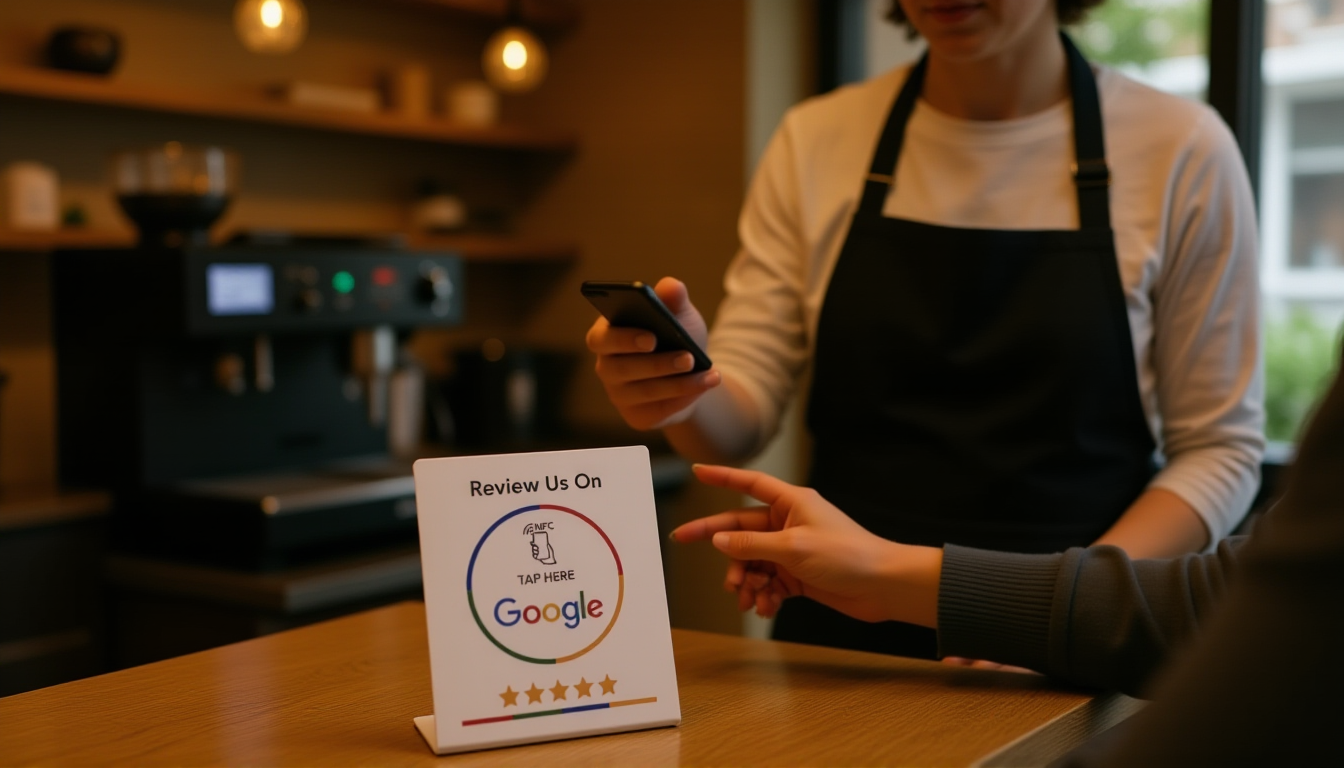
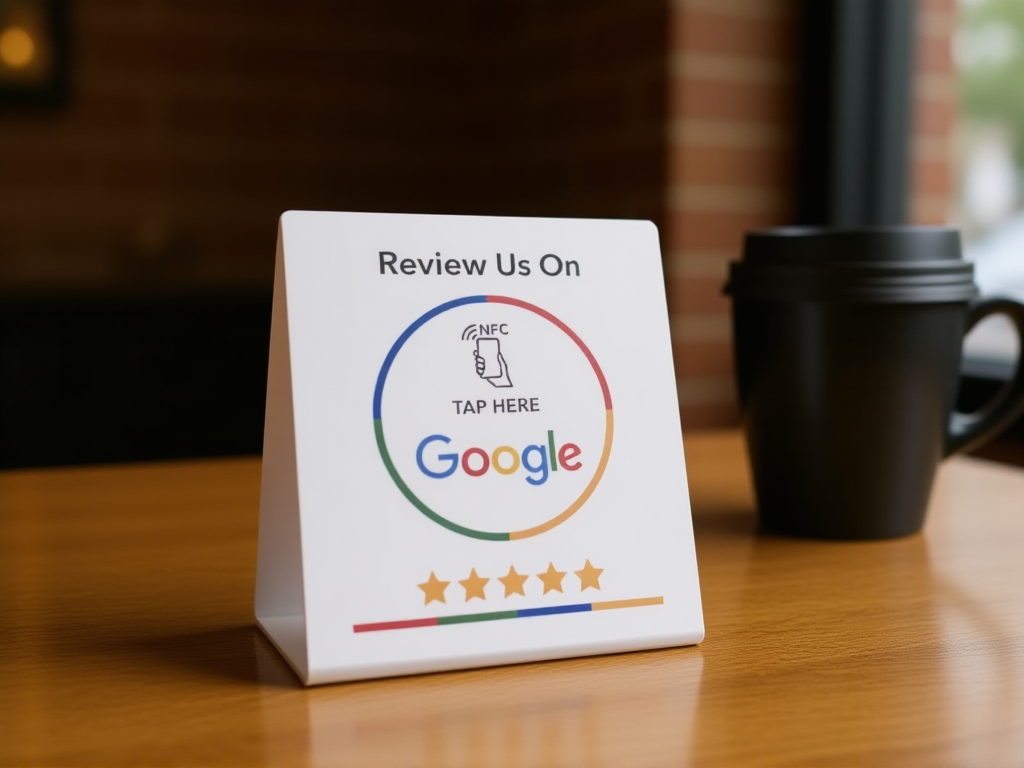
Physical solutions like NFC review cards placed at your point of sale can be particularly effective. A customer simply taps their phone to the card and lands directly on your Google review page—no searching, no typing, just one tap. This frictionless approach dramatically increases conversion rates from ask to actual review.
Timing Your Review Requests
When you ask for a review matters as much as how you ask. The optimal moment is immediately after a positive customer experience, when satisfaction is highest and the interaction is fresh in their mind.
For service businesses, this might be right after project completion. For restaurants, it's as customers pay their bill. For retail stores, it's at checkout after a pleasant shopping experience. The longer you wait, the less likely a customer is to follow through.
Train your staff to identify moments of customer delight and make the ask natural. A simple "We'd love to hear about your experience on Google" combined with an easy method like tapping an NFC card can feel like a natural extension of good service rather than an awkward request.
Responding to Reviews Boosts Your Ranking Too
Getting reviews is only half the equation. How you respond to them also influences your local search performance. Google's algorithm considers business engagement with reviews as a positive ranking signal.
Respond to every review when possible, both positive and negative. Thank customers for positive feedback, address concerns in negative reviews professionally, and show that you're an active, engaged business owner. These responses demonstrate to both Google and potential customers that you value feedback and care about customer experience.
Keep responses concise, genuine, and timely. A response within 24-48 hours shows you're attentive. Use the customer's name when possible, and vary your language rather than using copy-paste templates that look robotic.
The connection between Google reviews and local business ranking is clear and measurable. Businesses that prioritize generating fresh, authentic reviews while maintaining high quality and engagement will consistently outrank competitors who neglect this critical ranking factor. The good news is that unlike many SEO factors, review generation is entirely within your control—it just requires a systematic approach and consistency.
Ready to collect more reviews?
The ReviewCard ships across Europe, starting at €24.95. No subscription, ever.
See pricing